

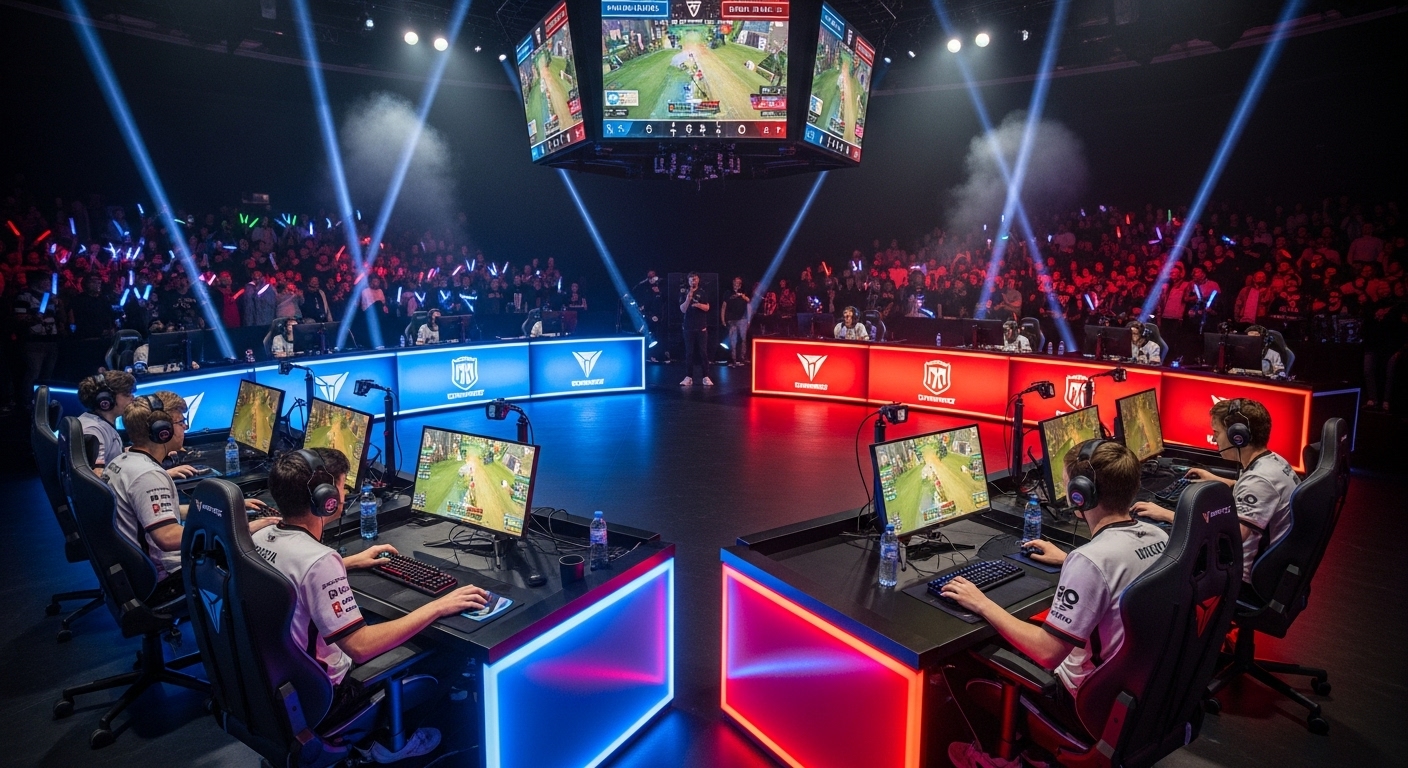
Esports, once a niche hobby for a small group of gamers, has blossomed into a global phenomenon, captivating millions of fans, players, and organizations. What started in the 1990s as small local tournaments has transformed into a multibillion-dollar industry with worldwide recognition, influencing everything from entertainment to culture, technology, and business. In this blog, we will explore the evolution of esports, its rise to mainstream success, and the factors driving its rapid growth. We will also look ahead to the future of esports, its impact on traditional sports, and its place in the digital world.
The Humble Beginnings of Esports
Esports’ origins trace back to the early days of video games when people would compete against each other for fun or bragging rights. In the 1970s and 1980s, arcade games like Pong and Space Invaders introduced the idea of competition. Players who visited arcades began to challenge each other to beat high scores or engage in head-to-head play. However, it wasn’t until the 1990s that the first formalized competitive gaming events began to emerge.
Early Competitive Gaming
The first notable esports event took place in 1997 with the Red Annihilation tournament for the popular first-person shooter game, Quake. This event, held by id Software, marked a significant moment in the history of esports, as it not only attracted players from around the world but also set the stage for the development of competitive gaming as we know it today. The prize for winning the Red Annihilation tournament? A Ferrari sports car.
At the same time, other games like StarCraft and Warcraft began to develop dedicated player bases, particularly in South Korea, where gaming had already become a massive cultural phenomenon. The early 2000s saw the first major esports events, including the World Cyber Games and Cyberathlete Professional League (CPL), which introduced players and fans to the excitement of large-scale, organized tournaments.
The Growth of Esports: The Role of the Internet and Streaming Platforms
The next significant milestone in the rise of esports was the advent of online multiplayer games and the widespread availability of broadband internet in the late 1990s and early 2000s. With these technological advancements, players could compete against one another from the comfort of their own homes, opening up competitive gaming to a global audience.
The Impact of Streaming Platforms
As the internet grew, so did the platforms that allowed people to watch gaming competitions. The launch of Twitch, a live-streaming platform in 2011, was a game-changer for esports. Twitch quickly became the go-to site for gamers to broadcast their gameplay and for viewers to watch their favorite players and teams compete in real-time. By 2014, Twitch had already gained millions of active users, and it was acquired by Amazon for nearly $1 billion.
The rise of streaming platforms like YouTube Gaming, Facebook Gaming, and Mixer (now defunct, but it helped shape the landscape) further propelled esports into mainstream recognition. Viewers could now watch major esports tournaments, stream casual gameplay, and interact with the gaming community from anywhere in the world.
Major Tournaments and Global Reach
With the explosion of online connectivity, esports tournaments started to grow in size and complexity. Games like League of Legends, Dota 2, Counter-Strike: Global Offensive, and Overwatch became the cornerstone of competitive gaming. These games introduced professional leagues, sponsorships, and international competitions, often offering multi-million-dollar prize pools. The League of Legends World Championship, for example, regularly attracts millions of viewers worldwide, rivaling traditional sports events in viewership.
Esports tournaments have become global spectacles, with tournaments held in massive arenas or broadcasted online to millions. Cities around the world, from Los Angeles to Shanghai to Berlin, have hosted events with audiences that fill entire stadiums. In 2018, the Dota 2 International reached a prize pool of over $25 million, cementing esports as a legitimate contender in the world of professional sports.
Esports as a Business: The Economic Impact
Esports has rapidly evolved from a hobbyist activity to a major industry. In fact, esports is expected to generate over $1.6 billion in revenue by 2024, a figure that rivals many traditional sports leagues. The money flowing into esports comes from a variety of sources, including sponsorships, broadcasting rights, merchandise, and ticket sales.
Sponsorships and Partnerships
Sponsorships play a crucial role in the esports economy. Just like traditional sports, esports teams and tournaments attract big-name brands looking to advertise to a highly engaged, tech-savvy audience. Companies like Intel, Coca-Cola, Nike, and Mercedes-Benz have all signed deals with major esports organizations, creating mutually beneficial partnerships.
The rise of esports has also given rise to esports agencies, which manage teams, players, and marketing partnerships. For example, major organizations like Team Liquid, Cloud9, and FaZe Clan are not only involved in gaming but also operate as brands, producing content, selling merchandise, and engaging with fans across social media.
Broadcasting and Media Rights
As esports events have grown in size, so has the value of broadcasting rights. Major streaming platforms like Twitch and YouTube offer exclusive deals to tournament organizers, giving them access to millions of viewers. Additionally, traditional media outlets, including ESPN and Fox Sports, have started broadcasting esports events, reaching even wider audiences. The growing presence of esports on television and cable networks signals its transformation into a mainstream form of entertainment.
Merchandising and Live Events
Merchandising also plays a crucial role in the esports economy. Fans who follow their favorite teams and players purchase jerseys, hats, posters, and other items to show their support. Live events and tournaments have similarly become major sources of revenue. Not only do they generate ticket sales, but they also boost local economies, as esports events often attract tourists and fans from across the globe.
The Cultural Impact of Esports
Esports has had a profound effect on global culture, reshaping the way people view video games and competition. While gaming has traditionally been seen as an isolated activity, esports has made it a social and community-oriented experience. Fans can now gather online to cheer on their favorite teams, participate in discussions, and share content with other fans.
Changing Perceptions of Gamers
In the past, gamers were often stereotyped as antisocial or isolated individuals, but esports has changed that perception. Competitive gaming has introduced the concept of the professional gamer—the esports athlete. These players train for hours each day, practice with their teams, and compete at the highest levels, often under intense pressure. Much like athletes in traditional sports, esports players undergo rigorous physical and mental preparation, which has helped elevate gaming to a respected professional discipline.
The recognition of esports as a legitimate profession has also paved the way for scholarships, college programs, and career opportunities. In the United States, many colleges and universities now offer esports scholarships to attract talented players to their teams, helping students pursue higher education while competing at a professional level.
Social Media and Fan Communities
Social media has played a vital role in connecting fans and players. Esports personalities, such as Ninja, Shroud, and Pokimane, have become household names, thanks to their massive social media followings and live-streamed content. These creators often share their gaming experiences, behind-the-scenes footage, and personal moments, fostering a closer relationship with their fans.
Communities formed around games like League of Legends, Fortnite, and Valorant have created vibrant spaces for fans to engage in discussions, share memes, and celebrate the esports culture. These communities are often extremely dedicated, organizing fan events, online tournaments, and even creating fan art to show their appreciation for their favorite players or teams.
The Future of Esports
As esports continues to grow, it’s poised to become an even more integrated part of global entertainment culture. The introduction of new technologies like virtual reality (VR) and augmented reality (AR) could take esports to new heights, offering more immersive experiences for players and spectators alike. VR esports tournaments, for example, could allow players to physically move and interact within a virtual environment, making competitive gaming more interactive and engaging.
The future of esports also includes expanding into traditional sports venues. In recent years, esports organizations have begun to rent out stadiums and arenas, creating an atmosphere similar to that of traditional sports events. These live, in-person experiences could become more common as esports teams and tournaments continue to grow.
Additionally, the potential integration of esports in the Olympic Games has been a topic of conversation. While esports is not currently included, discussions around its potential inclusion reflect the increasing mainstream acceptance of esports as a legitimate form of competition.
Conclusion: Esports—A Cultural and Economic Force
Esports has evolved from a subculture to a mainstream entertainment industry, and its influence shows no signs of slowing down. From humble beginnings in arcades and LAN parties to massive international competitions with multi-million-dollar prize pools, esports has firmly established itself as a global phenomenon. It has reshaped the way people view gaming, introduced new business models, and created a platform for millions of fans to connect and engage.
As technology continues to advance and new generations of gamers come into the fold, esports will undoubtedly continue to innovate and inspire. Whether it’s through the growth of streaming, the rise of esports scholarships, or the introduction of immersive virtual experiences, the future of esports promises to be as exciting and dynamic as the game itself.