

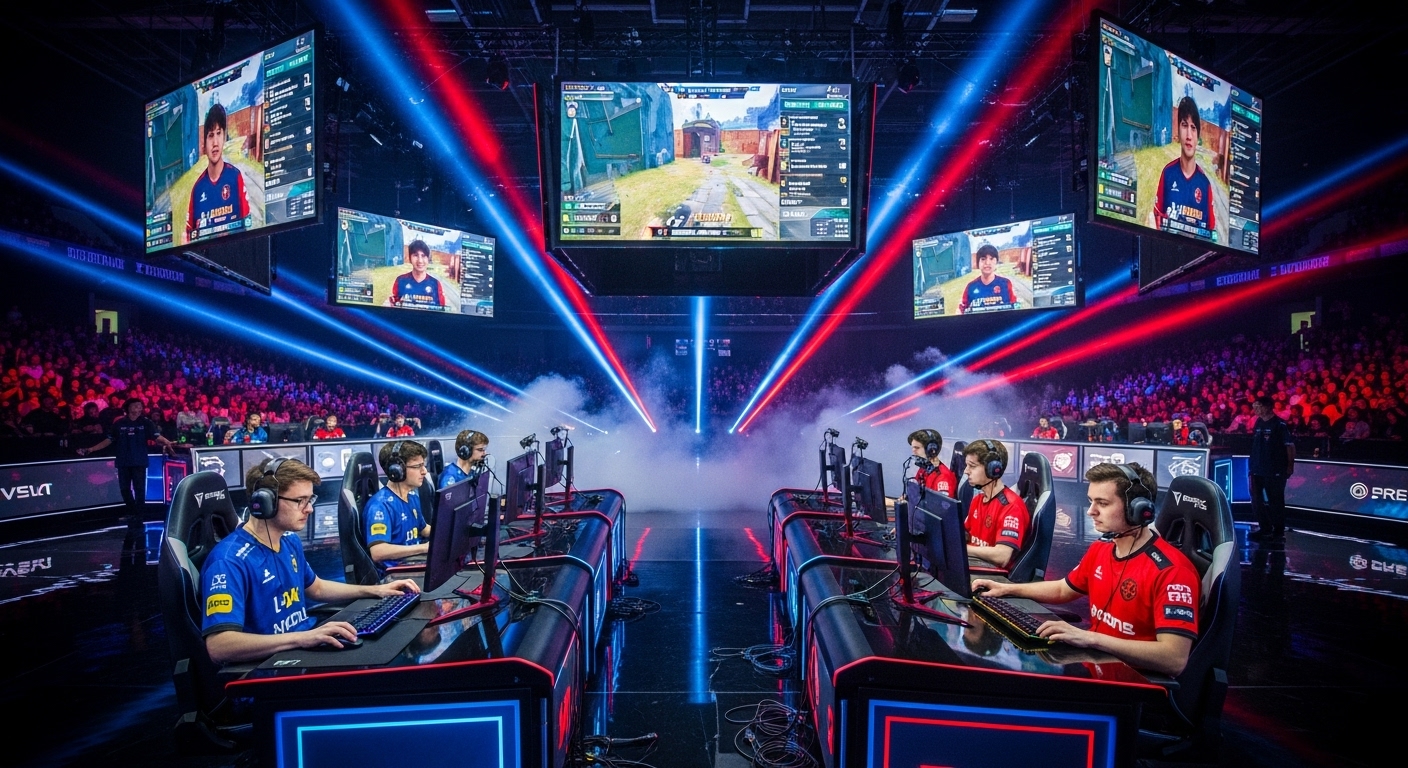
In the digital age, esports has emerged as one of the most influential and rapidly growing sectors in the entertainment industry. The days of gaming being a solitary hobby in basements or arcades are long gone. Competitive gaming, or esports, has evolved into a global phenomenon, complete with professional leagues, multi-million-dollar sponsorship deals, live streaming platforms, and a devoted fanbase. From humble beginnings to global championships, esports has cemented itself as a mainstream form of entertainment, offering players and fans alike a space where skill, strategy, and community converge. In this blog, we will explore the rise of esports, its cultural significance, the future of competitive gaming, and how it has revolutionized the way we view entertainment.
The Origins of Esports: From Casual Competition to Professional Sport
The concept of competitive gaming began in the late 20th century, when gaming systems and technology began to evolve beyond basic single-player experiences. In the early days, video games were designed primarily for single-player enjoyment or multiplayer fun among friends in a local setting. However, as internet access became more widespread, multiplayer games allowed players to connect with others across the globe.
One of the first major milestones in the history of esports was the Red Annihilation tournament in 1997, a Quake competition that is considered one of the first major competitive gaming events. While it was small by today’s standards, this event set the stage for what was to come. The early 2000s saw the rise of organized events like the Cyberathlete Professional League (CPL) and the World Cyber Games (WCG), which were among the first tournaments to offer prize money and attract international players. These tournaments, while niche, planted the seeds for a much larger esports ecosystem.
By the mid-2000s, competitive gaming began to gain traction as a legitimate sport. Games like StarCraft and Warcraft turned into esports staples, particularly in South Korea, where they gained national recognition. These games were broadcast on television, making them accessible to mainstream audiences and fueling the growth of esports as a form of entertainment. As the internet and gaming infrastructure continued to improve, players from around the world began to form teams, compete in tournaments, and make their mark in what was once considered a fringe activity.
The Impact of Streaming: Bringing Esports to the Masses
One of the key factors that contributed to the rapid expansion of esports was the rise of live streaming platforms, particularly Twitch. Launched in 2011, Twitch revolutionized how gamers and esports fans consumed content. No longer were fans relegated to watching tournaments on television or through limited online broadcasts; now, they could tune in to live streams of their favorite players, teams, and events in real-time.
The interactive nature of Twitch allowed fans to communicate directly with players and fellow viewers, creating a sense of community and engagement that was unparalleled. As esports tournaments began to stream on Twitch, they reached millions of viewers around the world. These platforms gave gamers the ability to showcase their skills and compete in front of an ever-expanding global audience, further fueling the popularity of esports.
Twitch quickly became the go-to platform for esports content, with top players and tournament organizers using the platform to broadcast major events. By 2014, Twitch had become a cultural phenomenon, and in 2014, Amazon acquired the company for nearly $1 billion, cementing its place as the dominant player in the live streaming space. Other platforms like YouTube Gaming and Facebook Gaming have since joined the market, but Twitch remains the central hub for esports fans and players alike.
Streaming also allowed fans to experience esports from the comfort of their own homes, eliminating geographical barriers. Fans could now watch international tournaments such as the League of Legends World Championship or The International (Dota 2) from any location. The accessibility of these events helped esports reach millions of fans who might otherwise have never been exposed to competitive gaming.
The Professionalization of Esports: Players, Teams, and Leagues
As esports continued to grow in popularity, it began to follow the model of traditional sports in terms of organization, professionalism, and career opportunities. Professional players emerged as the stars of the industry, signing contracts with major esports organizations and competing in high-stakes tournaments with multi-million-dollar prize pools.
The creation of major esports leagues helped solidify competitive gaming as a legitimate career. For example, the League of Legends Championship Series (LCS) and the Overwatch League established regular-season matches, playoffs, and world championships, complete with team sponsorships, coaching staff, and analyst support. These leagues not only helped standardize competitive play but also provided structure for the growing esports ecosystem.
Professional teams like Cloud9, Team Liquid, and Fnatic have become household names, fielding rosters in multiple games and competing at the highest level of play. These teams operate like traditional sports organizations, complete with coaches, analysts, and management staff to ensure their players have the best chance at success. The importance of teamwork, strategy, and individual skill has made esports teams comparable to those in professional sports leagues.
For the players themselves, competitive gaming is no longer just a hobby; it is a full-time profession. Salaries for professional gamers can reach impressive figures, particularly for top-tier players. Prize money from large tournaments is just one source of income for these players, who also earn through sponsorship deals, merchandise sales, and content creation. Some esports players have become multimillionaires, with players like Johan “N0tail” Sundstein of Dota 2 earning over $7 million from tournament winnings alone.
In addition to traditional professional players, content creators and streamers have carved out their own niche within the esports industry. Streamers and YouTubers with massive followings can make substantial incomes through ad revenue, donations, sponsorships, and merchandise sales. These influencers serve as ambassadors for the esports community, helping to grow the fanbase and engage viewers in a way that traditional athletes may not be able to.
The Global Reach of Esports
One of the defining features of esports is its truly global appeal. Unlike traditional sports, which are often limited by geography, language, or cultural differences, esports transcends these boundaries. Players and fans can connect across continents, competing and spectating from anywhere in the world.
Certain regions have become hubs for esports activity. South Korea, for example, has long been a leader in competitive gaming, particularly with games like StarCraft, League of Legends, and Overwatch. The country’s government and corporate sector have invested heavily in esports infrastructure, from esports arenas to training facilities. South Korea has become home to some of the world’s best players and most successful esports organizations.
China, too, has become a powerhouse in the esports world. Games like Honor of Kings and League of Legends dominate the Chinese gaming market, and the country has a rapidly growing esports scene. In fact, China has surpassed the United States in terms of esports revenue and is expected to remain the largest market for competitive gaming for the foreseeable future.
North America and Europe are also major players in the esports ecosystem. The United States has seen an explosion of esports tournaments, leagues, and sponsorships, while Europe has produced some of the most successful esports teams and players in games like Counter-Strike: Global Offensive and League of Legends. Meanwhile, Southeast Asia, particularly countries like the Philippines and Indonesia, has experienced a boom in mobile gaming, with games like Mobile Legends and PUBG Mobile gaining enormous popularity.
As internet access and technology improve globally, esports is poised to continue its expansion into new regions. Latin America, the Middle East, and Africa are emerging as key players in the global esports ecosystem, with increasing numbers of fans, players, and organizations establishing a presence in these markets.
Esports and Its Cultural Impact
Esports has gone beyond just gaming to influence broader aspects of culture, including fashion, entertainment, and even education. In terms of fashion, professional gamers and streamers have become icons in their own right, with their signature styles influencing the design of clothing and merchandise. Esports teams and brands now have their own lines of jerseys, hoodies, and accessories, which are sold to fans worldwide.
Moreover, esports has had a significant impact on the entertainment industry as a whole. Major streaming platforms like Netflix, Amazon Prime, and Hulu have started producing esports-related content, including documentaries, shows, and films. These productions give fans an inside look into the lives of professional players, teams, and the esports industry, further solidifying the relationship between gaming and mainstream entertainment.
Education has also felt the impact of esports. Many colleges and universities now offer scholarships for esports players, and dedicated esports programs are being developed to help students pursue careers in the industry. Esports has been recognized as an official sport in some schools, and the concept of “esports degrees” is gaining traction as more students aim to enter the growing field.
The Future of Esports
The future of esports is incredibly bright, with numerous possibilities on the horizon. As technology continues to advance, we can expect even more immersive gaming experiences through virtual reality (VR) and augmented reality (AR). These technologies could create entirely new ways of experiencing competitive gaming, offering fans and players unprecedented levels of interaction and engagement.
Mobile gaming is another area that will continue to grow, particularly in regions like Southeast Asia and Latin America, where smartphone usage is widespread. Mobile esports tournaments, including those for PUBG Mobile and Free Fire, are already attracting millions of viewers and players, and this trend will only accelerate as the mobile gaming infrastructure improves.
In addition, esports will continue to attract new sponsorships and investments from both traditional brands and tech companies. The increasing integration of esports with traditional sports leagues, such as the NBA 2K League and the Overwatch League, demonstrates that esports is becoming a legitimate part of the global sports landscape.