

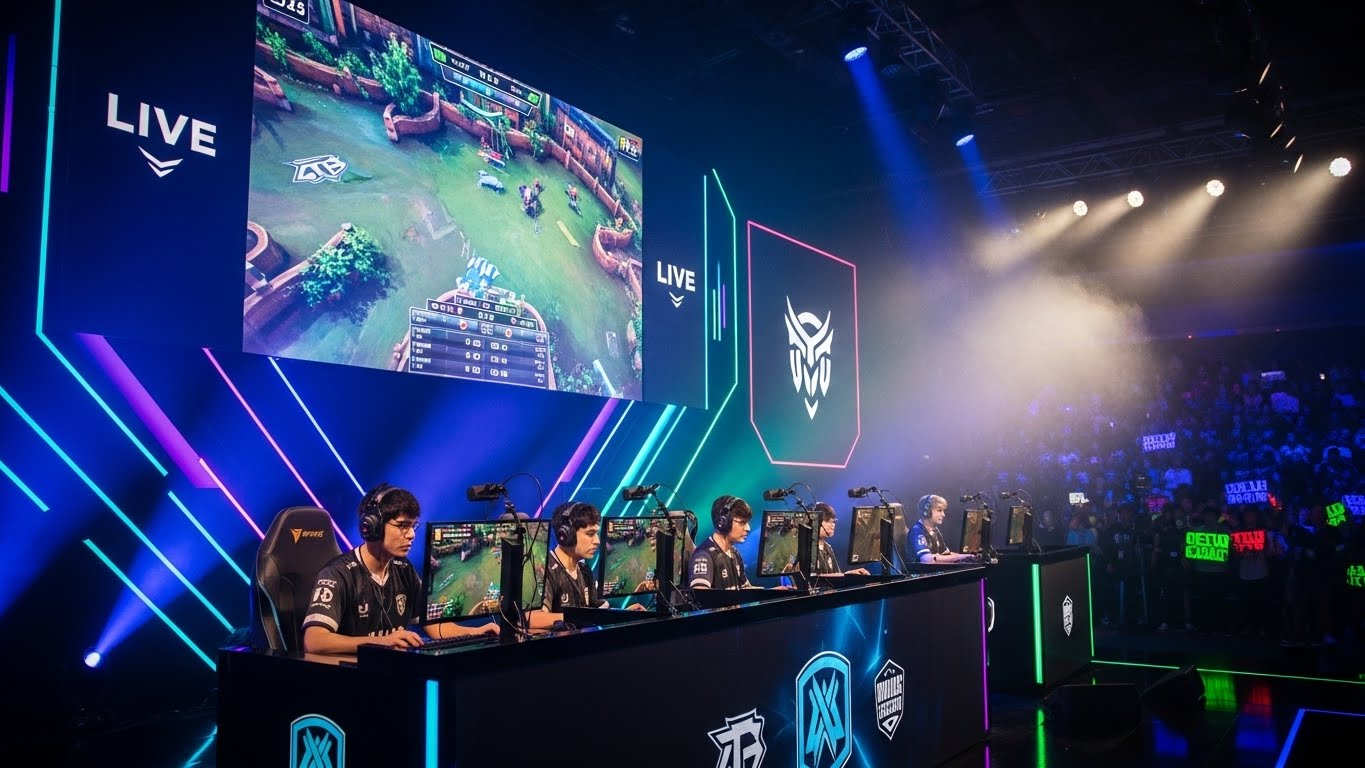
Esports has become one of the most influential industries of the modern era, transforming from a casual pastime into a global sporting empire. What started as small, local competitions among passionate gamers has evolved into an international ecosystem filled with professional athletes, massive tournaments, mainstream recognition, and cultural impact. Today, esports is not only reshaping entertainment but redefining what competitive sports can be. This blog explores the rise of esports, its cultural power, economic footprint, technological backbone, and the future of digital competition.
The Early Foundations of Competitive Gaming
The roots of esports stretch back several decades, long before high-definition displays and cloud gaming existed. In the early era of arcade machines and home consoles, gamers gathered informally to challenge one another. These competitions were not structured or commercialized, but they laid the groundwork for organized play. Games like Space Invaders and Pac-Man inspired some of the first gaming tournaments, showcasing the excitement and competitiveness that gaming naturally fostered.
As personal computers became more common, multiplayer titles introduced a new era. Games such as Quake, StarCraft, and Counter-Strike offered true competitive depth. Local area network gatherings became popular, allowing groups of players to meet physically and compete in the same digital space. These early LAN parties gave rise to the concept of organized gaming events and established a community-driven foundation that esports would later build upon.
The Transformation Into a Professional Sport
The 2000s marked a shift from casual competition to professional gaming. Companies realized that structured tournaments, professional teams, and prize pools could draw large audiences. Players began dedicating themselves full-time to improving their skills, and esports organizations emerged to provide training, equipment, and sponsorship opportunities.
This professionalization elevated esports to a new level. Skilled players with lightning-fast reflexes, strategic minds, and immense dedication became recognized as legitimate athletes. They trained for hours daily, studied game mechanics, practiced teamwork, and maintained intense discipline. Esports built a culture of excellence much like traditional sports, with players competing on a global stage for fame, respect, and major financial rewards.
The Role of Technology in Esports Growth
The meteoric rise of esports is deeply intertwined with advancements in technology. High-speed internet made online multiplayer gaming more accessible and reliable. Modern gaming hardware provided smoother graphics, faster response times, and more immersive gameplay, allowing competitive matches to be broadcast with exceptional clarity.
Broadcasting software, streaming platforms, and real-time chat systems created an entirely new form of entertainment. Fans could now watch players live, learn from them, interact with them, and join communities centered around their favorite games and teams. This technological evolution shaped esports into a global spectator sport with millions of dedicated followers.
Streaming and the New Era of Digital Audiences
No other platform has influenced esports more dramatically than streaming. The shift from traditional televised sports to online, on-demand content opened the door for a new kind of audience engagement. Esports fans no longer needed to physically attend events or wait for scheduled broadcasts. Every match, tournament, and practice session became instantly accessible.
Streaming created a personal bond between players and fans. Viewers were able to watch their favorite professionals train, experiment with strategies, and share insights. This transparency built admiration and loyalty. Communities formed around personalities just as much as around tournaments, giving players social influence beyond their competitive achievements.
Streaming also democratized competition. Anyone with a computer and internet connection could broadcast their own gameplay, showcasing skill and personality. Many professional players began their careers as streamers, using their platforms to attract teams and sponsors.
Esports as a Legitimate Career Path
A few decades ago, the idea of making a career out of playing video games was rare and widely dismissed. Today, esports offers multiple career avenues, not just for players but for anyone passionate about gaming. Professional players earn salaries, prize winnings, and sponsorships. They have coaches, analysts, nutritionists, and managers who support their development.
Beyond players, esports has created opportunities for commentators, event hosts, video editors, social media managers, psychologists, and marketers. Tournament organizers, game developers, production crews, and branding agencies all play vital roles in making esports events successful.
Colleges and universities are also embracing esports by offering scholarships, training programs, and varsity-level competitions. This support not only legitimizes gaming but encourages young players to pursue competitive gaming with academic and career-oriented goals in mind.
The Global Cultural Influence of Esports
Esports is not confined to a particular country or demographic. It has become a global cultural force, influencing fashion, music, entertainment, and lifestyle. Professional players have millions of fans worldwide, and many achieve celebrity status. Teams produce branded merchandise, host fan meetups, and create content that reaches audiences far beyond the gaming scene.
Esports events attract enormous crowds, filling stadiums and arenas just like traditional sports. Fans display team colors, wave banners, and celebrate as passionately as any sports audience. The atmosphere during championship events is electric, proving that competitive gaming can inspire the same emotional connection as any long-established sport.
Esports also acts as a unifying force. It brings together people from different cultures, languages, and backgrounds who share a common love for gaming. Players compete on international teams, and fans support competitors from countries around the world.
Mental Skills and Strategy in Esports
One of the biggest misconceptions about esports is that it lacks physical or intellectual challenge. In reality, success in esports demands intense mental agility, fast decision-making, and strategic depth. Players must process vast amounts of information within seconds and coordinate with teammates under extreme pressure.
Competitive gameplay requires pattern recognition, spatial awareness, problem-solving, and emotional control. Just like traditional athletes, esports players train rigorously to enhance their reflexes, improve their communication, and perfect their strategies.
Furthermore, the psychological aspect of competition plays a major role. Players must stay composed during high-pressure moments, adapt to unexpected situations, and recover quickly from mistakes. These mental skills mirror those of elite competitors across all sports.
The Economic Power of the Esports Industry
Esports has grown into a multibillion-dollar industry, driven by sponsorships, advertising, merchandise, media rights, and live events. Major companies invest heavily in teams and tournaments, recognizing the influence and purchasing power of gaming audiences.
Large-scale events attract millions of viewers, making esports one of the most-watched entertainment formats globally. Teams operate like professional sports organizations, with structured management, training facilities, and brand partnerships.
The economic ripple effect of esports extends into hardware manufacturing, software development, event production, and educational programs. The industry continues to generate new jobs and business opportunities as its popularity expands.
Esports and the Future of Virtual Entertainment
Looking ahead, esports is poised for even greater expansion. Technological innovations such as virtual reality and augmented reality offer potential for entirely new styles of competitive gaming. Cloud gaming may make high-performance play accessible to even more people around the world.
As the industry matures, the lines between gaming, entertainment, and media will continue to blur. Esports organizations are evolving into multimedia brands, producing documentaries, lifestyle content, and interactive fan experiences. Live events are becoming larger and more elaborate, with advanced production tools creating immersive environments for spectators.
Additionally, more traditional sports leagues are recognizing the value of esports. Collaborations between sports teams and esports organizations are becoming increasingly common, blending digital and physical athleticism in exciting new ways.
Challenges and Opportunities Within Esports
Despite its success, esports faces challenges that must be addressed to ensure sustainable growth. Player health is a major concern, as the intense training schedules can lead to burnout or repetitive strain injuries. Establishing standardized player protections, fair contracts, and wellness programs is essential for long-term success.
Integrity is another critical issue. Esports must continually combat cheating, match-fixing, and unfair play through advanced monitoring and regulation. Maintaining trust within the community is vital for the industry’s reputation.
On the positive side, these challenges present opportunities for improvement. Stronger governance, better player support, and continued innovation will help esports evolve responsibly and professionally.
Conclusion: The Future Belongs to the Digital Competitor
Esports has transformed the world of competition, entertainment, and global culture. It is no longer a fringe activity but a mainstream powerhouse that inspires millions of fans and players worldwide. Its influence stretches across technology, education, media, and lifestyle, making it one of the defining industries of the modern age.
As the digital world continues to evolve, esports will lead the way in shaping the future of sports and entertainment. Its blend of skill, strategy, teamwork, and passion ensures that competitive gaming is here to stay. The digital arena is only expanding, and the next generation of champions will rise from screens, keyboards, and controllers into a global spotlight unlike any other.