

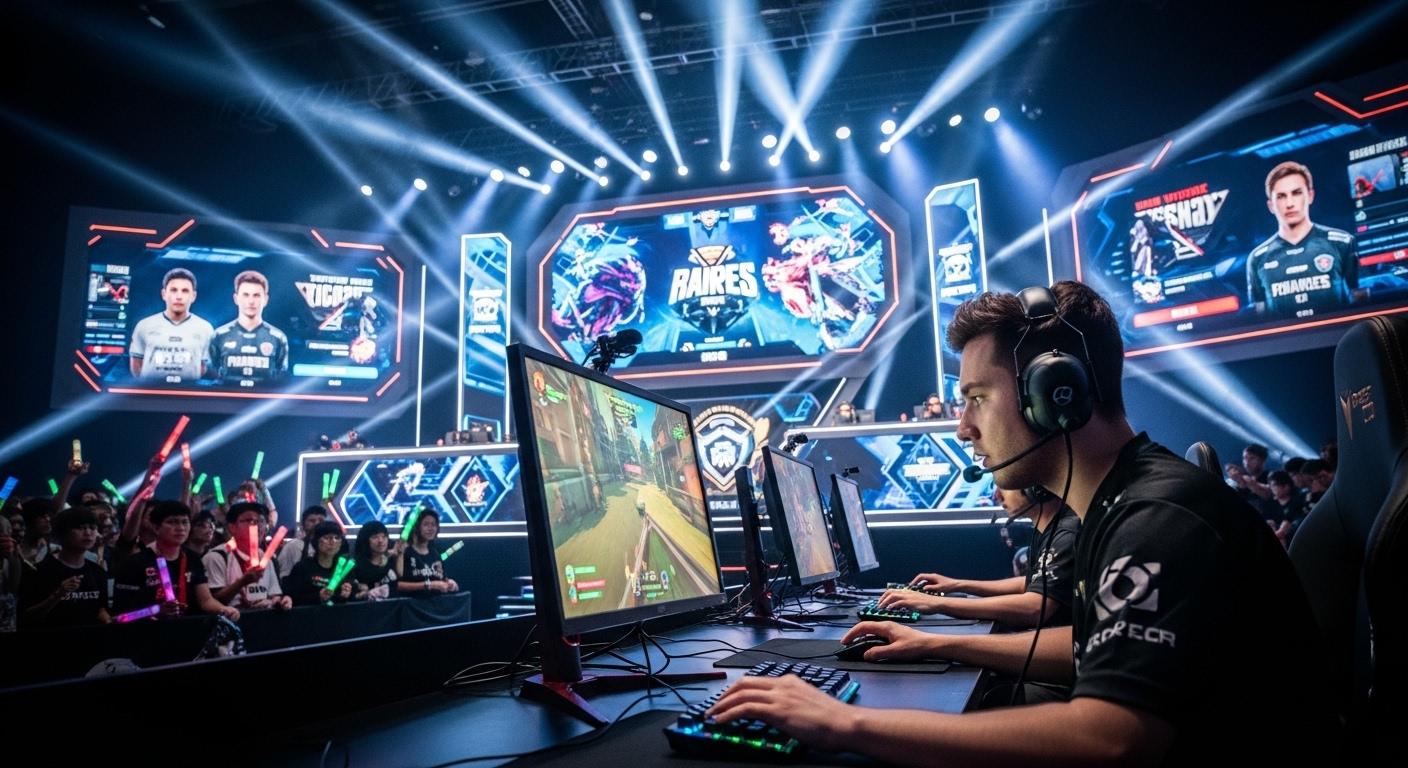
Esports, also known as competitive gaming, has emerged as one of the most influential forms of entertainment in the twenty-first century. What began as a niche pastime has transformed into a global phenomenon, attracting millions of players, fans, and investors. Esports represents more than just playing video games—it is a professional, organized, and highly competitive industry that blends skill, strategy, teamwork, and entertainment. The growth of esports has changed how people view games, reshaped the concept of competition, and even influenced broader aspects of culture, technology, and media.
The Origins of Competitive Gaming
The history of esports dates back to the late 1970s and 1980s, when arcade and home gaming became increasingly popular. Early competitions were informal, often organized in local arcades or gaming clubs, where players would challenge friends in games like Space Invaders, Pac-Man, and Donkey Kong. These events created a sense of community and marked the beginning of organized competitive gaming.
The first recorded large-scale gaming tournament was the Space Invaders Championship in 1980, held in the United States. Thousands of players participated, demonstrating the growing popularity of competitive gaming. This event laid the foundation for future competitions, showing that video games could be more than casual entertainment—they could be a platform for skill, strategy, and recognition.
The Evolution of Multiplayer Gaming
The 1990s marked a significant shift in the competitive gaming landscape with the rise of multiplayer games. Titles such as Doom, Quake, and StarCraft allowed players to compete against each other over local networks or the internet. These games introduced the concept of strategy, teamwork, and real-time competition on a larger scale.
South Korea played a pivotal role in shaping modern esports culture. By the late 1990s, StarCraft became a national obsession, with professional leagues, televised matches, and dedicated gaming cafes known as PC bangs. Players in South Korea were celebrated as athletes, and esports became recognized as a legitimate career path. This model would later influence other countries, helping establish esports as a global phenomenon.
The Birth of Professional Esports
By the early 2000s, competitive gaming began to professionalize. Players joined organized teams, signed contracts, and trained for extended hours daily. Professional leagues and tournaments emerged, offering substantial cash prizes and sponsorships. Titles such as Counter-Strike, Warcraft III, and Halo became staples of the competitive scene, attracting large audiences and cultivating loyal fanbases.
Organizations like Major League Gaming in North America helped formalize the esports industry, providing structured competitions, standardized rules, and media coverage. Players were no longer casual gamers—they became professional athletes of the digital arena, dedicating their time to skill development, teamwork, and strategic mastery.
Esports as a Global Industry
Today, esports is a multi-billion-dollar industry with a worldwide following. Tournaments are held in stadiums and arenas, with audiences spanning continents. Games like League of Legends, Dota 2, and Fortnite dominate the competitive scene, drawing millions of viewers through live streaming platforms. The scale of these events rivals traditional sports, with global broadcasts, sponsorship deals, and fan engagement comparable to professional football or basketball.
Major esports tournaments, such as The International for Dota 2 and the League of Legends World Championship, offer prize pools that exceed millions of dollars. The spectacle of these events attracts not only gamers but also mainstream media attention, corporate sponsorships, and enthusiastic fan communities worldwide. Esports has evolved into an industry where skill, strategy, and entertainment converge on a global stage.
The Structure of Competitive Play
Esports competitions resemble traditional sports in organization and structure. Professional teams consist of players specializing in specific roles, with coaches, analysts, and support staff helping optimize performance. Training schedules are rigorous, often requiring several hours of practice daily, focusing on mechanics, strategy, and teamwork.
Leagues and tournaments provide a hierarchical structure, with regional competitions feeding into international championships. This system allows players to progress through skill-based tiers, ensuring that only the best teams reach the top-level competitions. Prize money, sponsorships, and media exposure create strong incentives for players, reinforcing the professionalism of the industry.
Streaming and Audience Engagement
A key factor in the growth of esports has been live streaming. Platforms like Twitch, YouTube Gaming, and Facebook Gaming have transformed the way audiences interact with competitive gaming. Fans can watch live matches, engage with commentators, and follow their favorite players in real time.
Streaming has also created new revenue streams for players and organizations. Subscriptions, donations, and sponsorships provide financial support, while interactive features like chat and community events enhance engagement. The social aspect of streaming fosters community, allowing fans to feel connected to players and tournaments while sharing experiences with fellow enthusiasts.
Economic Impact of Esports
Esports is not only a cultural phenomenon but also a significant economic force. The industry generates billions of dollars annually through sponsorships, advertising, ticket sales, media rights, and merchandise. Major corporations invest heavily in esports, recognizing its potential to reach a young, tech-savvy demographic.
Professional organizations operate like traditional sports franchises, with dedicated management teams handling marketing, media, and player development. Esports has also influenced the broader gaming industry, driving game sales, in-game purchases, and online engagement. The economic ecosystem surrounding esports creates jobs, fuels innovation, and supports careers beyond the players themselves.
Training, Strategy, and Discipline
Professional esports requires discipline and strategic thinking akin to traditional sports. Players engage in intensive practice sessions, study opponents, and analyze gameplay to optimize performance. Mental focus, reflexes, and decision-making under pressure are critical components of success.
Teams employ coaches, analysts, and even nutritionists to ensure players maintain peak performance. Physical fitness and mental health are increasingly recognized as essential, helping prevent burnout and maintaining consistency in competitive performance. The dedication and preparation involved demonstrate that esports is a serious pursuit requiring skill, strategy, and commitment.
Technological Advancements in Esports
Technology plays a central role in esports. High-performance computers, gaming peripherals, and fast internet connections are essential for competitive play. Data analytics and AI tools are used to study gameplay, develop strategies, and enhance performance.
Emerging technologies like virtual reality and augmented reality promise to redefine esports in the future. These innovations could provide new forms of immersive competition, blending traditional gaming with entirely new experiences. Technology continues to drive the evolution of esports, expanding its possibilities and shaping its future.
Esports and Education
Esports has entered the educational sphere, with schools and universities offering programs, scholarships, and competitive leagues. These programs provide structured environments for aspiring players while teaching skills such as teamwork, leadership, and strategic thinking.
Intercollegiate esports competitions have grown in popularity, with schools competing regionally and nationally. Educational institutions recognize esports as a legitimate avenue for skill development and career opportunities, reflecting the broader societal acceptance of gaming as a professional pursuit.
Cultural Influence of Esports
Esports has become a cultural force, shaping trends in fashion, music, and lifestyle. Gaming personalities are celebrated as celebrities, influencing social media, online trends, and youth culture. Esports fandom mirrors traditional sports culture, with fan merchandise, dedicated events, and enthusiastic online communities.
The global nature of esports fosters inclusivity and cultural exchange. Players and fans from diverse backgrounds connect through shared interests, creating communities that transcend geographical and cultural boundaries. Esports is not only entertainment—it is a social and cultural phenomenon that brings people together.
Challenges and Sustainability
Despite its success, esports faces challenges. Player burnout, mental health concerns, and regulatory issues require careful management. Intense practice schedules, public scrutiny, and the competitive nature of the industry can take a toll on players’ well-being. Organizations are addressing these issues through wellness programs, structured routines, and professional support.
The industry also faces challenges related to fair play, cheating, and intellectual property. As esports grows, governance, regulation, and ethical standards become increasingly important to ensure long-term sustainability and credibility.
The Future of Esports
The future of esports is bright and full of possibilities. Virtual reality, augmented reality, and artificial intelligence will redefine competition and engagement. Mobile esports continues to grow, making gaming more accessible to wider audiences. International tournaments are expected to expand further, offering larger prize pools, immersive fan experiences, and broader media coverage.
Esports will continue to merge with traditional sports, entertainment, and media, creating new forms of hybrid experiences. It represents the convergence of technology, creativity, and competition, offering opportunities for innovation, community building, and cultural expression.
Conclusion
Esports has evolved from small arcade competitions to a global industry with millions of fans and professional players. It combines skill, strategy, and entertainment in ways that rival traditional sports. The industry has created economic opportunities, cultural impact, and educational pathways, demonstrating that competitive gaming is a legitimate and influential force.
As technology advances and gaming culture expands, esports will continue to grow, attracting new audiences and pushing the boundaries of competition and entertainment. It is more than just games—it is a reflection of human creativity, discipline, and connection in the digital age.
Esports represents the future of competitive entertainment, uniting people across the globe through shared passion, skill, and excitement in a rapidly evolving digital arena.