

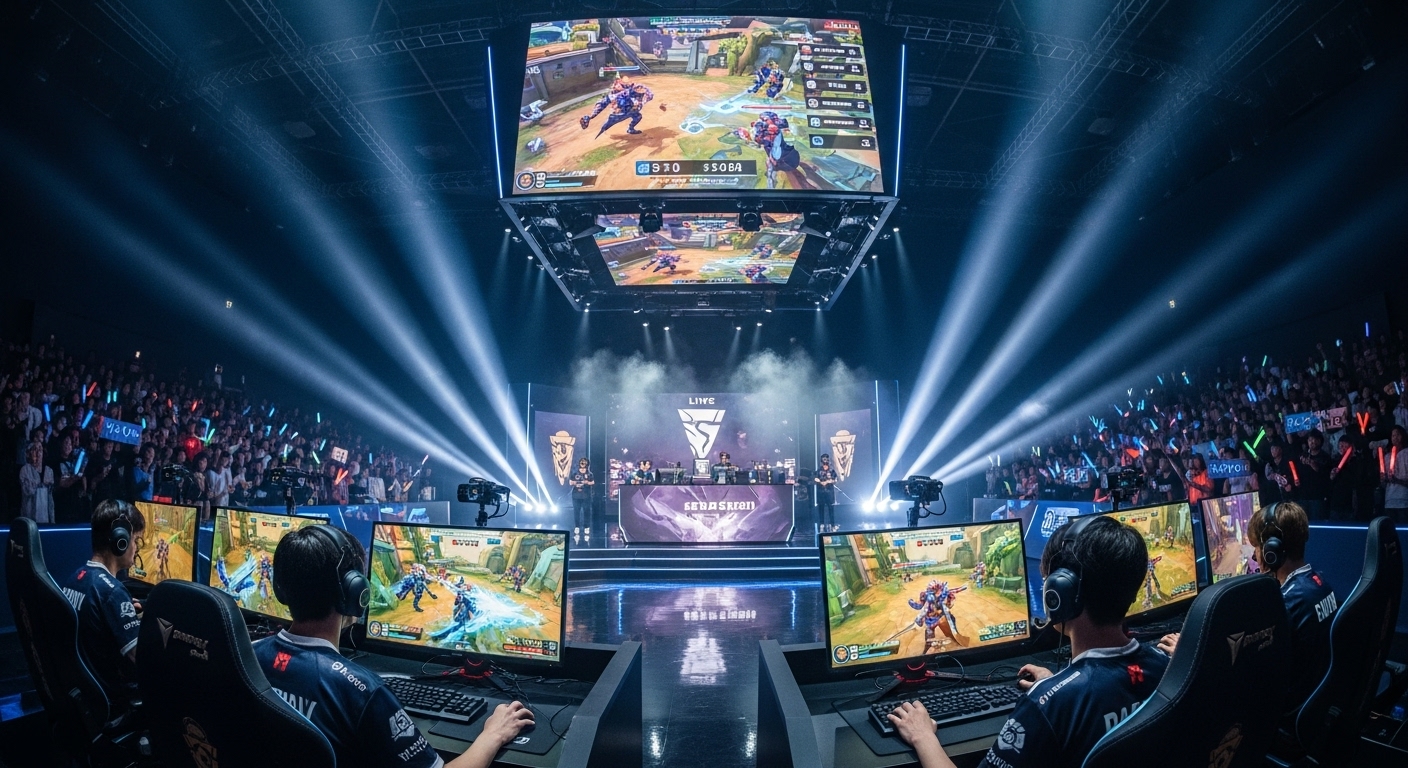
Esports, short for electronic sports, refers to organized, multiplayer video game competitions, particularly between professional players, individually or as teams. The global esports phenomenon has grown exponentially since its humble beginnings, transforming from a niche subculture into a multibillion-dollar industry. In this comprehensive blog post, we will explore the history of esports, its current state, the impact it has had on the gaming industry, the business and professional aspects of the sport, and its future trajectory.
1. The Birth of Esports: From Arcades to Online Gaming
The origins of esports can be traced back to the late 20th century when competitive gaming first emerged. While video games themselves had been around for decades, it was the rise of arcades in the 1970s and 1980s that provided the first platform for competitive play. Games like Pong, Space Invaders, and Pac-Man captured the imagination of millions, leading to informal competitions in local arcades.
However, the concept of esports began to take shape with the advent of home consoles and personal computers. In the early 1990s, games like Doom and Warcraft introduced multiplayer modes that allowed players to compete against each other remotely. This was the precursor to online gaming, which would become a cornerstone of esports in the coming decades.
The first major milestone in esports history occurred in 1997 with the launch of the Red Annihilation tournament, which was organized around the game Quake. This event was one of the first large-scale tournaments with a significant cash prize, attracting a global audience. The success of this event laid the groundwork for future esports tournaments.
2. The Rise of Online Gaming: Building the Foundations of Modern Esports
By the late 1990s and early 2000s, the internet revolutionized how people played games. Broadband connections enabled players to connect with others across the globe, and competitive gaming began to shift from local, LAN (Local Area Network) parties to online multiplayer tournaments.
Games like StarCraft, Warcraft III, Counter-Strike, and Battlefield 1942 became the foundational pillars of esports during this period. In South Korea, StarCraft became a national obsession, with televised competitions and professional teams being formed. This was the golden age of StarCraft, where players like Lee “Life” Seung Hyun and Lim “BoxeR” Yo-Hwan became household names, and esports tournaments were broadcast on television.
One of the most significant advancements during this time was the establishment of esports organizations and professional teams. These teams began to recruit players, sponsor events, and create a sense of structure and professionalism in the esports landscape. Platforms like Battle.net (Blizzard Entertainment) and GameSpy (used for Counter-Strike and other multiplayer games) facilitated the online play of many of the most prominent games in esports history.
3. The Professionalization of Esports: Entering the Mainstream
As the 2000s progressed, esports continued to mature. In the mid-2000s, the competitive scene began to evolve with the rise of large-scale tournaments and global sponsorships. The World Cyber Games (WCG), founded in 2000, became one of the first truly international esports competitions. It brought players from different countries together to compete in games such as WarCraft III, FIFA, and StarCraft.
Meanwhile, in North America and Europe, the emergence of games like League of Legends, Dota 2, and Counter-Strike: Global Offensive (CS:GO) helped establish new competitive gaming scenes. The rapid rise of League of Legends (LoL) in particular is one of the most defining moments of the esports boom. Created by Riot Games in 2009, LoL quickly became one of the most played and watched games in the world, largely due to its combination of team-based mechanics, strategic gameplay, and accessibility to new players.
The increasing popularity of these games led to the creation of professional leagues and tournaments such as the League of Legends Championship Series (LCS) and Dota 2’s The International. These tournaments offered players massive prize pools and attracted millions of viewers worldwide, setting the stage for esports to become a true spectacle, much like traditional sports.
4. Esports as a Business: Sponsorships, Prize Money, and Media Deals
The next major step in esports’ evolution was the growth of its business side. As esports gained traction, major companies began to take notice. Technology firms like Intel, AMD, and Nvidia began sponsoring tournaments and players, while energy drink brands like Red Bull and Monster signed sponsorship deals with esports teams and events. These partnerships helped create the financial infrastructure that would allow esports to flourish.
Another key aspect of esports’ business model is the lucrative prize money offered in competitions. The prize pools for tournaments have skyrocketed over the years, with some events now offering millions of dollars in winnings. Dota 2’s The International is a prime example, with its 2021 prize pool exceeding $40 million. These massive prize pools attract top-tier talent from around the world, further raising the stakes and prestige of esports competitions.
Media deals have also been crucial to the growth of esports. Streaming platforms like Twitch and YouTube Gaming have allowed esports to reach a global audience, while traditional broadcasters like ESPN and TBS began airing esports events in prime time. In 2016, ESPN launched a dedicated esports section on its website, signaling the mainstream acceptance of esports as a legitimate sport. Streaming platforms not only help players build their fanbases but also allow sponsors and advertisers to reach millions of viewers in real-time.
5. Esports and the Professional Player: Career Paths and Challenges
For the professional players themselves, esports has created a career path that was previously unavailable. Professional gamers can now sign contracts with esports teams, stream for income, and participate in a variety of tournaments throughout the year. This has opened up a new world of opportunities for talented players, especially those in countries where traditional sports careers may not be as accessible.
However, being a professional esports player is not without its challenges. Most players begin their careers in their teens, and many are considered past their prime by the age of 25. The lifestyle of a professional gamer is intense, requiring hours of practice and in-game coordination with teammates. The pressure to perform at a high level consistently can lead to burnout, and injuries, particularly those related to repetitive strain (such as carpal tunnel syndrome), are common.
Despite these challenges, some players have achieved celebrity status within the esports community. Famous players such as Faker (Lee Sang-hyeok) of League of Legends and KuroKy (Kuro Salehi Takhasomi) of Dota 2 have transcended the game itself, becoming icons in the esports world. These players not only compete but also engage with their fans on social media, stream their gameplay, and become ambassadors for the games they love.
6. The Global Esports Scene: Regional Popularity and Cultural Impact
Esports is a global phenomenon, but its popularity varies by region. In South Korea, esports has become deeply embedded in the culture, with televised tournaments and esports-specific arenas dedicated to games like StarCraft and League of Legends. The country is also home to some of the most successful esports players and teams in history.
In China, the esports scene has exploded, particularly around League of Legends, Honor of Kings, and Dota 2. The Chinese government has even recognized esports as a legitimate profession, with educational programs dedicated to the study of gaming and esports management. Similarly, Europe and North America have strong esports communities, with events held in major cities like Los Angeles, Paris, and Berlin.
Despite differences in regional preferences, one common thread among esports players and fans worldwide is the sense of community. Esports fans are passionate, often supporting specific teams and players through thick and thin. This sense of belonging is especially important for many young people who identify with the digital world of gaming in ways that are similar to how fans of traditional sports rally around their teams.
7. The Future of Esports: Trends, Innovation, and Growth
The future of esports looks incredibly promising, with several trends pointing to continued growth and innovation.
Virtual Reality and Augmented Reality
As technology advances, we may see a shift from traditional gaming to more immersive experiences through virtual reality (VR) and augmented reality (AR). Games like VRChat and Beat Saber have already shown the potential for VR in esports, and it’s only a matter of time before we see fully immersive esports competitions taking place in virtual worlds.
Mobile Esports
The rise of mobile gaming, particularly in markets like Asia, has introduced a new form of competitive play. Games like PUBG Mobile, Arena of Valor, and Clash Royale have already attracted huge player bases and are now featured in professional esports tournaments. The accessibility of mobile gaming will likely continue to push esports into new territories, especially in emerging markets.
Esports as an Olympic Sport
There has been growing speculation about the possibility of esports becoming an official Olympic sport. The International Olympic Committee (IOC) has recognized the growing importance of esports, and in 2021, the IOC held the Olympic Virtual Series, which showcased virtual sports like motor racing and baseball. While esports has not yet made its way into the Olympic Games, the possibility of its inclusion remains a topic of discussion.
Conclusion: A New Era of Competitive Gaming
Esports has come a long way since its early days in arcades and local LAN parties. From a niche activity to a global phenomenon, esports has transformed into a multi-billion-dollar industry, offering opportunities for players, fans, and businesses alike. With growing mainstream recognition, increasing sponsorships, and a dedicated fanbase, esports is poised for continued growth in the coming years.
As technology evolves, new forms of gaming and competition will emerge, further shaping the esports landscape. Whether it’s virtual reality, mobile esports, or the potential inclusion of esports in the Olympics, one thing is certain: esports is here to stay, and it will continue to influence the world of gaming and entertainment for years to come.