

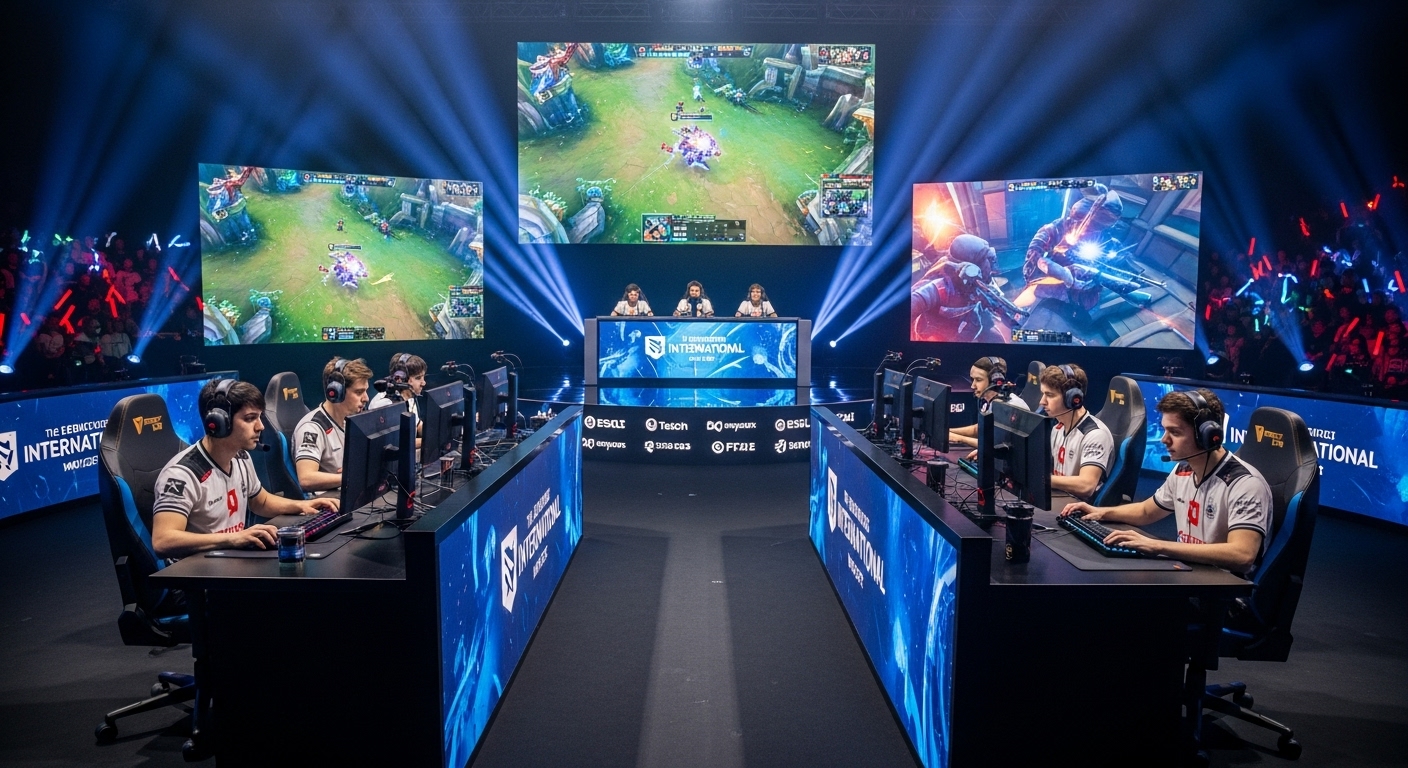
Over the past two decades, the world of entertainment has witnessed a profound shift. Traditional forms of competition, such as sports, have been joined by a new digital frontier known as esports. Esports, short for electronic sports, refers to organized, competitive video gaming at a professional level. What began as a niche hobby among gamers has transformed into a global phenomenon, with millions of fans, massive tournaments, and lucrative sponsorships. This blog post delves into the history, growth, cultural impact, and future of esports, offering a comprehensive look at this dynamic industry.
Origins of Competitive Gaming
The roots of esports can be traced back to the late 1970s and early 1980s, a time when video games were just beginning to enter popular culture. Early competitions, such as the Space Invaders Championship held in 1980, drew thousands of participants, laying the groundwork for competitive gaming. These events were often local or regional, lacking the infrastructure to connect players globally. However, they demonstrated that competitive gaming could attract large audiences and foster community engagement.
The 1990s saw a significant evolution in esports, coinciding with the rise of the internet and multiplayer gaming. Titles like Quake, StarCraft, and Counter-Strike became staples in the competitive scene. The introduction of LAN (Local Area Network) tournaments allowed players to compete against one another in real-time, while the growing online communities facilitated global interactions. The establishment of formal leagues and the rise of dedicated gaming venues during this era marked the transition of esports from casual gatherings to organized competition.
The Explosion of Esports in the 2000s
The early 2000s represented a turning point for esports. The industry began to professionalize, with the formation of leagues, sponsorship deals, and structured tournaments. Games such as Warcraft III, Counter-Strike: Source, and Dota rose to prominence, attracting competitive players from around the world. This period also saw the emergence of esports organizations, which managed teams, organized competitions, and provided training facilities for professional players.
Streaming technology played a crucial role in popularizing esports during this era. Platforms like Twitch, launched in 2011, enabled fans to watch live competitions in real-time. This accessibility helped bridge the gap between players and audiences, creating a sense of community and engagement that traditional sports often struggle to replicate. Esports tournaments began offering substantial prize pools, drawing attention from mainstream media and investors alike.
Popular Esports Titles
Esports encompasses a wide variety of game genres, each with its own unique competitive scene. Multiplayer online battle arena (MOBA) games, first-person shooters (FPS), and real-time strategy (RTS) games dominate the industry, with titles like League of Legends, Dota 2, and Counter-Strike: Global Offensive leading the charge. Each game requires a combination of strategy, reflexes, teamwork, and mental endurance, highlighting the skill and dedication of professional players.
MOBA games, in particular, have garnered enormous popularity due to their strategic depth and dynamic gameplay. League of Legends, developed by Riot Games, has become a cornerstone of competitive esports, with events like the League of Legends World Championship drawing millions of viewers worldwide. Similarly, Dota 2 is renowned for its complexity and massive international tournaments, including The International, which consistently offers multi-million-dollar prize pools.
FPS games such as Counter-Strike: Global Offensive and Call of Duty emphasize precision, quick reflexes, and coordinated team play. These titles appeal to fans who enjoy fast-paced, action-packed gameplay, while tournaments often feature dramatic storylines, rivalries, and unforgettable moments. RTS games like StarCraft II challenge players to balance resource management, strategic planning, and split-second decision-making, offering a cerebral and highly competitive experience.
The Professional Esports Ecosystem
Professional esports players are more than just skilled gamers; they are athletes in their own right. They dedicate countless hours to training, studying game mechanics, analyzing opponents, and refining strategies. Many esports organizations provide structured training programs, coaching, nutrition guidance, and mental health support to optimize player performance.
Esports tournaments have grown increasingly sophisticated, often held in large arenas with live audiences, elaborate stage setups, and high-quality production. Major events such as the League of Legends World Championship, Dota 2’s The International, and the Overwatch League Grand Finals are broadcast to millions of viewers, creating a spectacle comparable to traditional sporting events. Sponsorships from major brands, media rights deals, and merchandising have further professionalized the industry, turning esports into a multi-billion-dollar global business.
The Global Appeal of Esports
One of the defining features of esports is its global appeal. Unlike traditional sports that may be regionally dominant, esports transcends geographic boundaries. A player in South Korea can compete against someone in Brazil, while fans from multiple continents watch the event simultaneously. This international accessibility has contributed to esports’ rapid growth and its ability to cultivate a diverse, passionate community.
Asia, particularly South Korea and China, has long been a leader in competitive gaming. South Korea’s infrastructure for esports, including training houses, professional leagues, and government support, has set a global standard. China has invested heavily in esports development, creating professional leagues and hosting major international tournaments. North America and Europe have also embraced esports, with established leagues, sponsorship deals, and growing fanbases.
The inclusivity of esports further contributes to its appeal. Unlike some traditional sports that may have physical barriers, esports allows individuals of various ages, genders, and physical abilities to compete at a high level. This accessibility has broadened participation and fostered a sense of community among players and fans alike.
Economic Impact and Business Opportunities
Esports has evolved into a major economic force, generating revenue from multiple streams. Tournament prize pools, team sponsorships, streaming subscriptions, merchandise sales, and advertising collectively contribute to a multi-billion-dollar industry. Companies ranging from tech giants to energy drink brands recognize the marketing potential of esports, targeting a highly engaged, youthful audience.
Esports organizations have diversified revenue streams, including player transfers, media rights deals, and branded content partnerships. The professionalization of esports has also created a variety of career opportunities, not just for players but also for coaches, analysts, broadcasters, event organizers, and content creators. This growing ecosystem has attracted venture capital investment and fueled the development of infrastructure, such as esports arenas and training facilities.
Cultural Impact of Esports
Esports has influenced popular culture in significant ways. Video game characters, esports personalities, and memorable tournaments have become integral to digital media, social networks, and mainstream entertainment. Major esports events are celebrated not only as competitions but as cultural phenomena, often accompanied by music performances, celebrity appearances, and fan festivals.
The rise of esports has also challenged traditional notions of sports and competition. While some critics initially dismissed gaming as a pastime, esports’ professionalization, audience engagement, and financial scale have forced a reevaluation of what constitutes a sport. Educational institutions have even begun offering esports scholarships and varsity teams, further legitimizing competitive gaming as a serious pursuit.
Challenges Facing the Esports Industry
Despite its impressive growth, esports faces several challenges. Player burnout, mental health concerns, and intense pressure are significant issues within the competitive scene. Long practice hours, high expectations, and constant scrutiny from fans and sponsors can lead to stress and early retirements. Organizations are increasingly focusing on player welfare, but this remains an ongoing concern.
Regulation and standardization represent another challenge. Unlike traditional sports with long-established governing bodies, esports is fragmented across different games, leagues, and regions. This fragmentation can create inconsistencies in rules, player contracts, and tournament structures. Establishing industry-wide standards could enhance credibility and sustainability.
Additionally, esports must contend with negative perceptions, including associations with video game addiction, toxic online behavior, and concerns over fair play. Initiatives to promote positive gaming culture, enforce anti-cheating measures, and encourage responsible participation are essential for long-term growth.
The Role of Technology in Esports
Technology is at the heart of esports, driving both gameplay and audience engagement. High-performance gaming hardware, advanced graphics engines, and low-latency networking are essential for competitive play. Streaming technology allows fans to watch live events in high definition, interact via chat, and access supplementary content such as player interviews and analysis.
Artificial intelligence and data analytics have also become integral to esports. Teams utilize performance metrics, heatmaps, and predictive modeling to improve strategies and gain a competitive edge. Virtual reality (VR) and augmented reality (AR) technologies are beginning to explore new ways of experiencing esports, potentially revolutionizing the spectator experience in the coming years.
The Future of Esports
The future of esports looks incredibly promising. Continued investment, technological innovation, and cultural acceptance suggest that the industry will keep growing both in size and influence. We may see esports integrated more deeply into mainstream media, with broader television coverage, cinematic presentations, and cross-industry collaborations.
Esports may also expand into new formats, such as mobile esports, which leverages the accessibility of smartphones to reach new audiences. Social gaming and casual competitive platforms could further democratize esports, making it possible for more players to participate and gain recognition.
Educational initiatives, including esports programs in schools and universities, are likely to nurture future talent and provide structured pathways for professional careers. As the line between gaming and entertainment continues to blur, esports is poised to become an even more central part of global culture.
Conclusion
Esports has evolved from a niche hobby into a global industry with cultural, economic, and technological significance. Its growth reflects not only the popularity of gaming but also broader trends in digital connectivity, entertainment, and competitive culture. With professional players, international tournaments, and passionate fan communities, esports represents a modern evolution of human competition.
While challenges remain, including player welfare, regulation, and societal perception, the potential for innovation and expansion is immense. As esports continues to mature, it will likely shape the future of entertainment, redefine competitive sports, and offer opportunities for millions of players and fans worldwide. In this digital era, esports is more than just games—it is a phenomenon that celebrates skill, strategy, and community on a global scale.